
How did we get here?
Let’s take a few steps back and connect the dots.
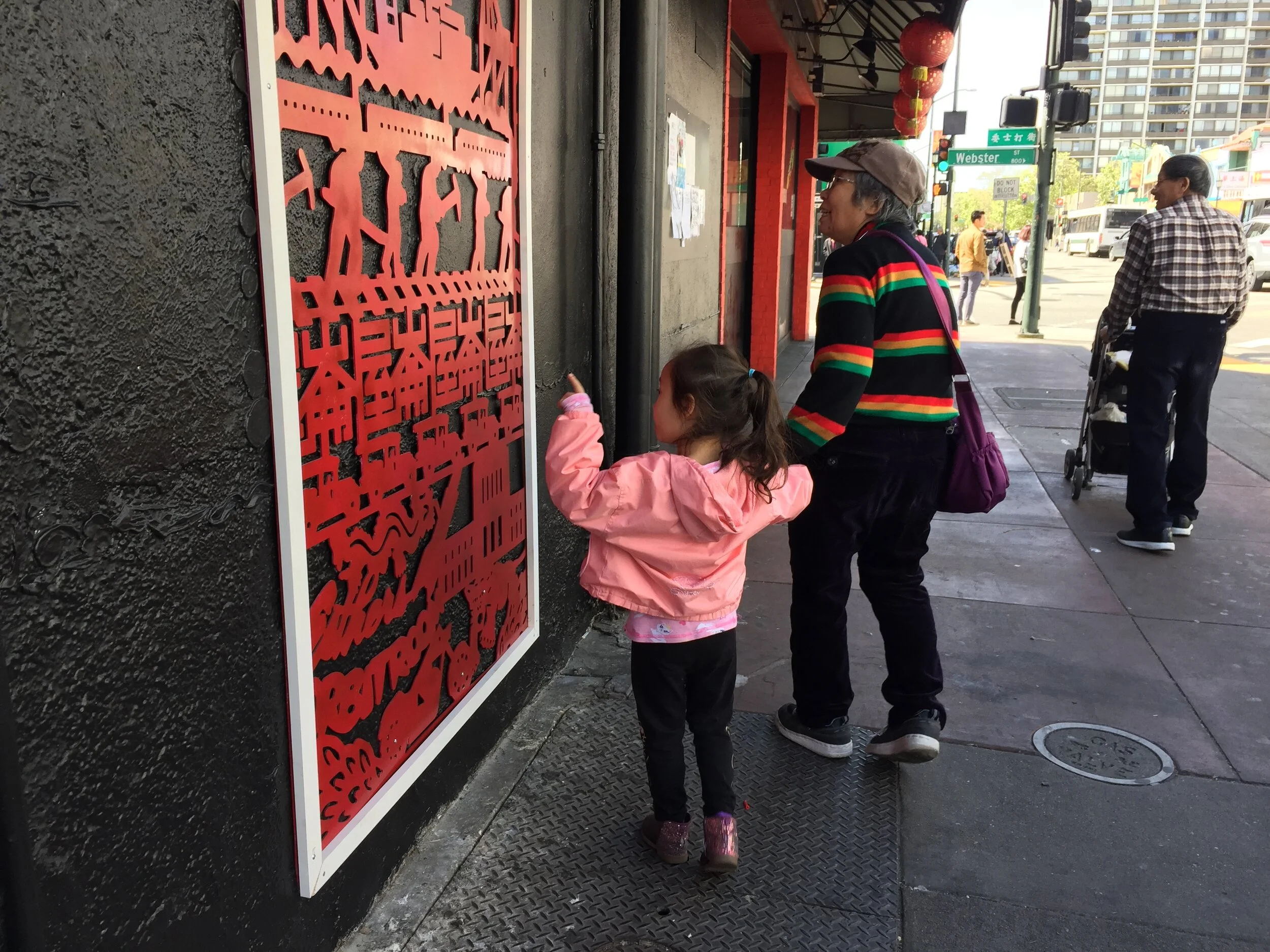
Oakland Chinatown comes from a resilient history, and has been building bridges within the community to pivot headfirst into a new world and new future. One example is www.chinatownimprovement.org. Chinatown Improvement was created 3 years ago to bring together various groups in different Chinatown sectors toward common goals of growing Chinatown communities and businesses. However, with the urgent need at hand, its initiatives had to pivot, and GOOD GOOD EATZ was quickly formed to handle the challenges and serve the more prescient issue of saving Chinatown businesses during this pandemic.

Starting in the 1850’s and 1860’s during the Gold Rush, Oakland Chinatown was growing until the Chinese Exclusion Act of 1882. This act was the first significant restriction on free immigration in U.S. history, and it excluded Chinese laborers from the country under penalty of imprisonment and deportation. It also made Chinese immigrants permanent aliens by excluding them from U.S. citizenship. Chinese men in the U.S. had little chance of ever reuniting with their wives, or of starting families in their new home.
For all practical purposes, the Chinese Exclusion Act, along with the restrictions that followed it, froze the Chinese community in place in 1882, and prevented it from growing and assimilating into U.S. society as European immigrant groups did. Later, the 1924 Immigration Act would tighten the noose even further, excluding all classes of Chinese immigrants and extending restrictions to other Asian immigrant groups. Until these restrictions were relaxed in the middle of the twentieth century, Chinese immigrants were forced to live a life apart, and to build a society in which they could survive on their own.
The San Francisco earthquake of 1906 brought a lot of Chinese to Oakland, and immigration through Angel Island through a loophole brought over 175,000 Chinese to the U.S. as paper sons and daughters.
Through the years Oakland Chinatown has seen organic growth up to the 1950’s. From that time, Chinatown has been moved and allowed to be encroached upon by federal, state, and city laws. In the late ‘50s and early ‘60s, large residential areas of Oakland Chinatown were eminent-domained to make way for the Merritt BART station, Laney College and the Oakland Museum. In more recent times, expansion of outside business improvement districts, cultural zones, massive market-rate development, and gentrification portends to shrink Chinatown once more. Over 15,000 new residents are projected to move into Downtown Oakland, with over 5,000 market rates built in the next 2 years. Only 200 affordable housing units will be built in Oakland at that time.
On the commercial level, most of these developments have large ground floor commercial units that will be leased at market rates to large businesses that can afford them, which make it near impossible for small family-owned businesses to consider for occupancy. This limits Chinatown and other cultural hubs in participating in opportunities and in new economies in the area.
In the case of the current Downtown Oakland Plan, and in City of Oakland marketing efforts, Chinatown has been largely invisible. Struggles to overcome cultural and language barriers on all sides results in little policy change that supports immigrants. On the ground, new bike and bus routes, as well as transportation planning, impacts parking and accessibility for the local and regional communities. The lack of impact fees from developers leave businesses to fend for themselves against a rapidly changing tide.